I am a theoretical biophysicist at Institute Curie, working with Pierre Sens to understand the mechanisms controlling cell shape and interactions with the extracellular matrix (ECM) through pushing forces. My current research lies at the intersection of analytical and computational modeling applied to the mechanical interaction between the plasma membrane, the actin cortex, and the ECM. With my work, I’m aiming to deepen the understanding of processes such as development, organogenesis, homeostasis or diseases like cancer.
I completed my PhD at Heidelberg University under the supervision of Ulrich Schwarz and Falko Ziebert, focusing on finite element modeling of optogenetic control of cell contractility. I have also worked on stochastic simulations describing the self-assembly of scaffold proteins.
With a wide range of research interests, I’m always seeking engaging collaborations with experimentalists. Don’t hesitate to get in touch if you’d like to connect or discuss potential collaborations.
(Background image credit: David Goodsell)
- Membrane, Microtubule and actin mechanics
- Mechanobiology, Cell contractility
- Optogenetics
- Continuum and Fluid mechanics
- Stochastic dynamics- protein self-assembly
since 2023 Postdoctoral researcher
Institut Curie (PCC), UMR168 Physics of Cells and Cancer
PhD in Theoretical Physics, 2022
Heidelberg University - ITP (Germany)
MSc degree in Physics, 2018
Heidelberg University - ITP (Germany)
BSc degree in Physics, 2015
Heidelberg University - KIP (Germany)
Research
Pushing Forces in Cell Mechanics
Cells interact mechanically with their environment not only by pulling but also by pushing from within, a fundamental aspect of cell mechanics that remains largely unexplored. While the role of pulling forces in sensing and migration is well established, how pushing forces allow cells to deform soft, three-dimensional environments and move without strong adhesion is still poorly understood. Understanding this pushing mechanism could reshape our view of cell migration in development, immunity, and cancer invasion. In my current research, I combine theoretical physics and quantitative modeling to understand how the cytoskeleton — especially actin and microtubules — and the plasma membrane generate, balance, and coordinate pushing forces. I develop multi-scale models that link local cytoskeletal dynamics and membrane mechanics to the global force balance needed for cells to migrate through complex environments without relying on strong adhesion.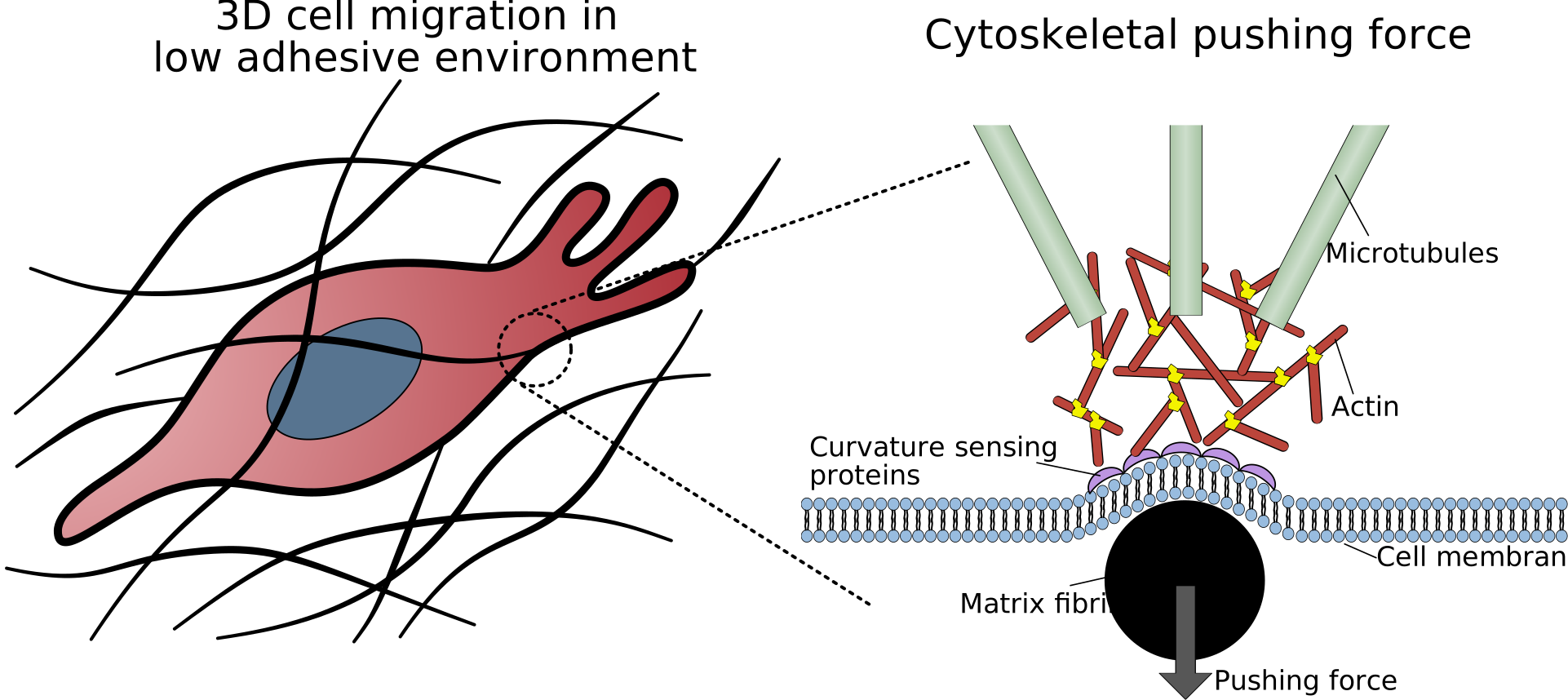
Optogenetic Control of Cell Contractility and Force Propagation
Cells generate and propagate contractile forces to sense, adapt, and maintain mechanical balance with their environment. While the basics of pulling forces are well known, the physical principles that link force generation within the cytoskeleton to force propagation across cells and tissues remain poorly understood. My research combines optogenetics, micropatterning, traction force microscopy, and continuum theory to reveal how actin architecture, cell size, and geometry shape both local force generation and long-range force transmission. By bridging experiments and active gel models, I aim to explain how cells dynamically regulate tension and coordinate mechanical signals at multiple scales.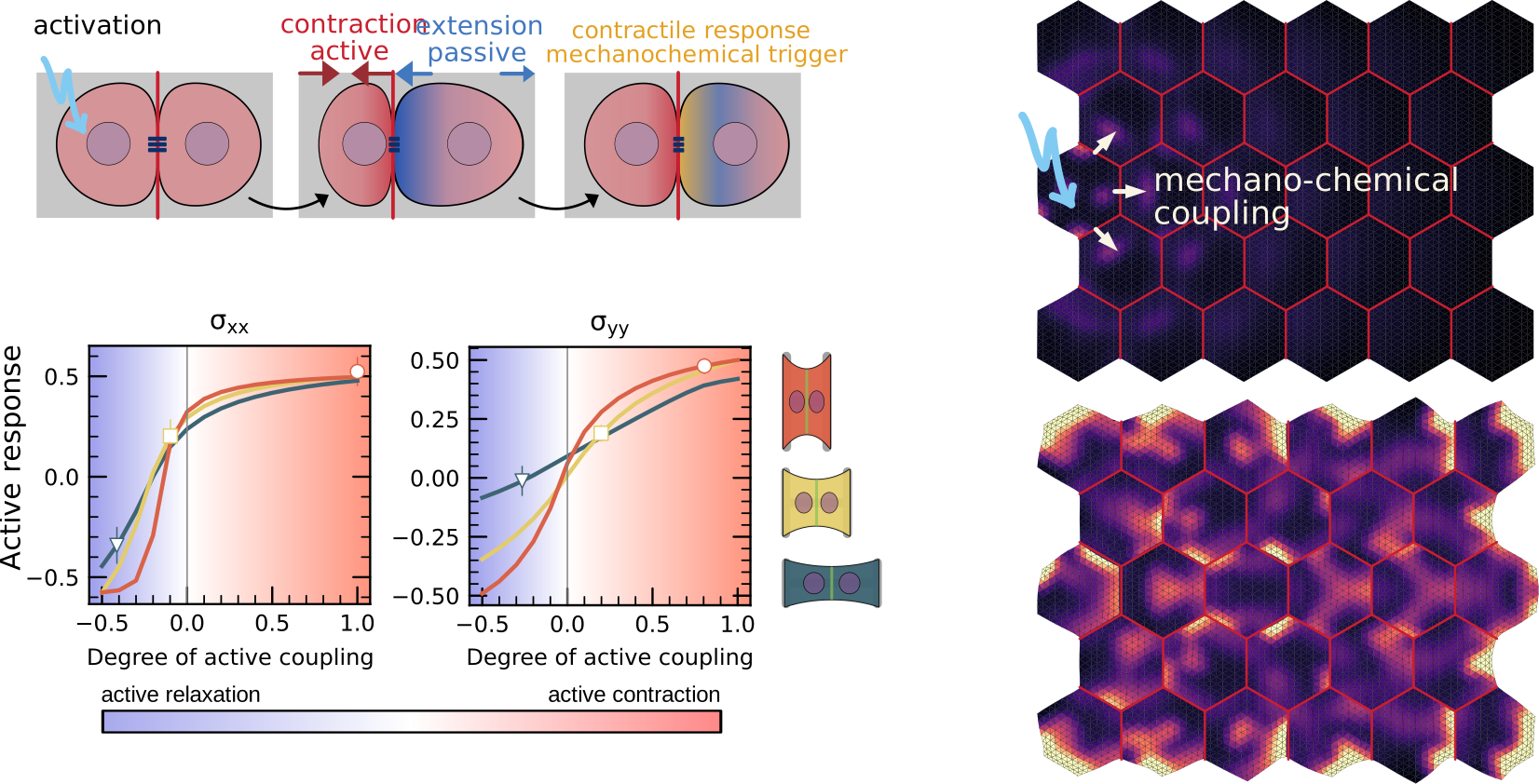
Brownian Dynamics Simulations of Protein Self-assembly
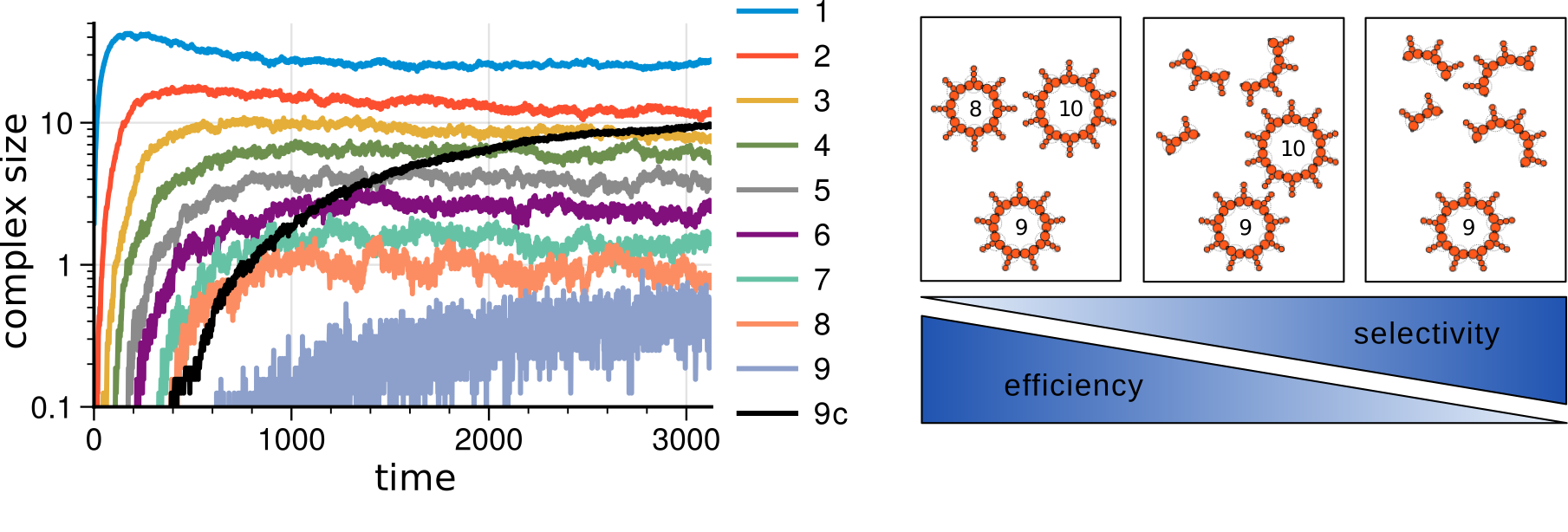
Many cellular structures, like the centriole, rely on precise protein self-assembly to build complex shapes with defined symmetries. The protein SAS-6 is essential for centriole formation because it forms dimers that self-assemble into nine-fold symmetric rings, establishing the centriole’s architecture. Recent experiments show that surfaces strongly promote this ring assembly by increasing encounter rates and forcing the structure to stay planar. In my work, I use Brownian dynamics simulations and reaction kinetics to study how surface adsorption, interaction energies, and angular constraints shape the efficiency and symmetry of SAS-6 ring formation, highlighting the physical conditions that favor robust and specific assembly.